
Building community through the love of Pickup Soccer
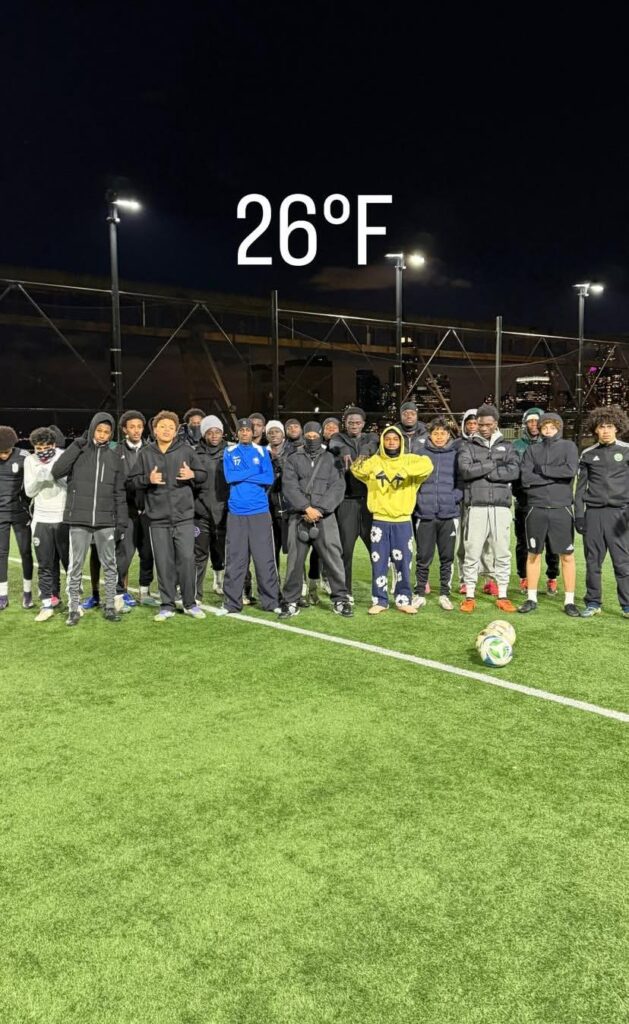
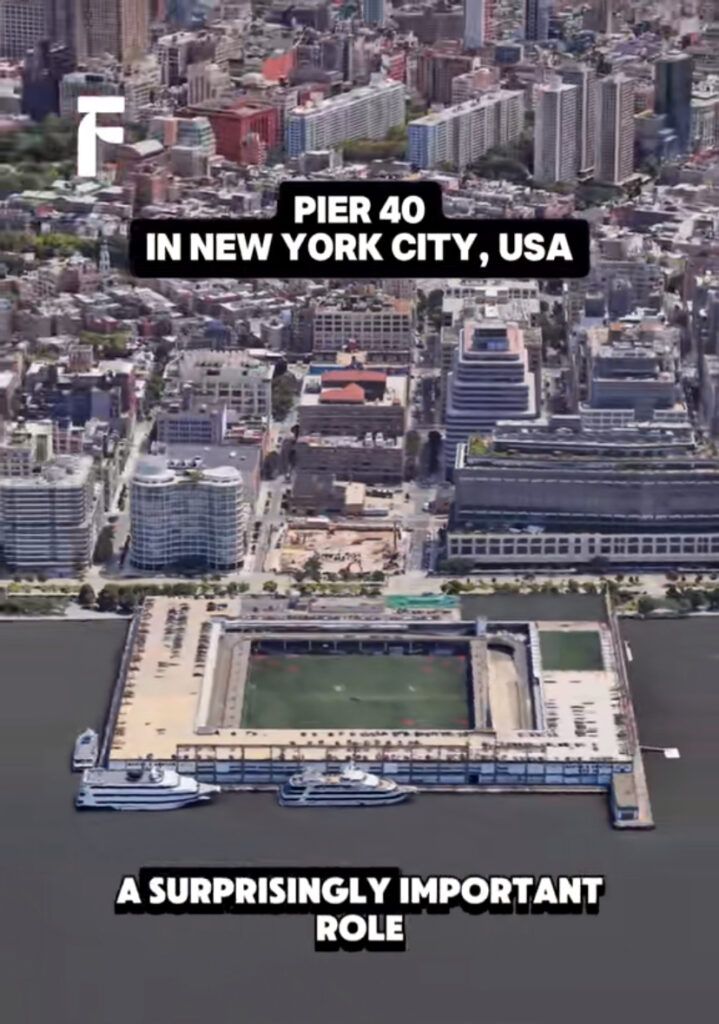
Soccer is one of the most popular sports in the world, but at Pier 40 it’s different.Right now I am standing by the fence at Pier 40 in Manhattan.There is a big river surrounding the field. The wind from the Hudson River is cold against my skin, and the smell is cool. I hear the sound of cleats scraping and balls bouncing repeatedly. Some players were shouting and making noise saying “Next goal wins!” “Who got next?” “Pass it back!” The game is fast, loud, and chaotic. On the sidelines, other players are stretching or chatting, waiting for their turn. This is a space where rules are not set by referees or coaches, but by the players themselves. Pickup soccer at Pier 40 is not just a game but rather it is a subculture and a community of people who resist mainstream sports culture while creating their own identity and social order.
This subculture is different from organized sports. In the main sports, there are referees, coaches, and strict rules that must be followed. But In pickup soccer, the players control everything. When there is a foul or disagreement, they argue, negotiate, and resolve the issue themselves. At one point, two players are chest to chest over whether a ball was out of bounds. One says, “Be honest, that’s out” while the other screams “Nah, that’s clean.” Tension fills the air. For a moment, it seems like it is about to get heated or turn into a fight, but then some of the players step in and tell them to relax. The players listen, put the ball back in play, and continue the game. This lets us know they create their own structure while still embracing freedom and fairness.
Language is an important part of this subculture. I overhear phrases like “run it back,” “chop rice,” and “Bounce out.” These words may confuse outsiders, but within this group, they communicate strategy, respect, and identity. Clothing also shows belonging. Some players wear bright soccer jerseys and cleats representing the big teams they play for(mls next), while others wear simple t-shirts and shorts. Skill and attitude matter more here too. I notice that when a player makes a good move, others react loudly with cheers. When a mistake happens, groans or laughter ripple through the group. Respect is earned through skill, decision making, and how players interact with one another.
This subculture resists mainstream sports in many ways. Mainstream culture emphasizes strict rules, official referees, and structured leagues. Pickup soccer rejects this structure. The players create and enforce rules themselves. According to Hebdige, subcultures “express what the dominant culture neglects, silences, or actively suppresses” (Hebdige 2). Pickup soccer expresses freedom, self-governance, and community building. The tension between mainstream sports and this subculture is different. Outsiders may view the players as chaotic, aggressive, or unorganized. I notice people walking by raising eyebrows or shaking their heads at the shouting, yet within the game, every shout has meaning.
The social connection and community in pickup soccer is one of its strongest features. Players come from many backgrounds, young, old, local, immigrant, beginner, and skilled people. Even strangers quickly form a bond through the game. According to David Trouille, in Fútbol in the Park, “pickup soccer allows people to create social ties in public spaces, fostering identity and community among participants” (Trouille 45). I observed this. Players help each other improve, celebrate good plays, and include newcomers. Arguments happen, but they are brief and often resolved through discussion or compromise. This shows that community and identity are maintained even without formal authority.
Pickup soccer also critiques mainstream sports culture. By playing without referees or official rules. Success is not only by winning a trophy or winning a season but by skill, respect, and teamwork during the game. The subculture demonstrates that competition, and fun can coexist without formal oversight. It also shows adaptability and negotiation skills. Arguments about fouls, boundary lines, or substitutions are resolved collaboratively, teaching players social and leadership skills often ignored in organized sports.
Some aspects of this subculture might be misunderstood.Outsiders may think the players are reckless, rude, or immature. However, the internal logic of the game is clear, everyone understands the rules, and conflicts are resolved quickly. Insider language, like “run it back” or “one touch,” reinforces belonging and helps maintain the culture. By speaking the same language, players create a shared identity. This helps keep the subculture intact, even as new players join or people leave.
Pier 40 is also an unusual space. Unlike the original sports arenas, it is a public park. There is no ticket fee, no coach, and no referee. The field is open to anyone, which allows the culture to thrive in an inclusive way. Sometimes someone passing by might join in, someone might create a new rule, or the game might end because everyone is tired or it’s become boring and people have to leave. These would be impossible in the original leagues. They show flexibility, creativity, and the subculture’s ability to adapt to real life circumstances.
Pickup soccer at Pier 40 matters because it reveals the importance of community, freedom, and identity in an urban setting. In a city like New York, where life can feel busy and isolating, this subculture shows how people come together through shared activity. It provides a space for expression, respect, and creativity that mainstream sports often lack. By observing this subculture, others can see how rules, social connections, and identity can be created from within, not imposed from above. Pickup soccer is more than a game because it is a living example of how subcultures resist mainstream norms while building meaningful human connection.
Through my essay I use ChatGPT to guide me organize my thoughts since it is 1,200 + . Used for MLA format.
Work Cited
Trouille, David. Fútbol in the Park: Immigrants, Soccer, and the Creation of Social Ties. University of Chicago Press, 2021.
Thornton, Sarah. Club Cultures: Music, Media, and Subcultural Capital. Wesleyan University Press, 1995

